
Strabismus (Crossed Eyes) - Squint Treatment
Squint Eye Treatment (Strabismus) for Children and Adults
Strabismus, commonly known as squint or crossed eyes, is a condition in which the eyes do not align in the same direction when looking at an object. One eye may turn inward, outward, upward or downward, either constantly or occasionally. Squint can affect children and adults and may be associated with double vision, reduced depth perception or impaired visual development.
At Nandadeep Eye Hospital, patients with squint and strabismus can undergo an eye evaluation to determine the type of eye misalignment and the treatment options appropriate to their condition. Treatment may include prescription glasses, prism lenses, amblyopia management, selected vision therapy or squint surgery, depending on the diagnosis.
If you notice that your child’s eyes are not aligned, or you experience new double vision or an eye turning out of position, consult an eye specialist for an examination.
Contact Nandadeep Eye Hospital at +91 92-2000-1000 to enquire about an appointment.
Causes of Strabismus
Strabismus is a condition involving misalignment of the eyes, often called squint eye or crossed eyes. Normally, the eye muscles work together to help both eyes point towards the same object. When eye alignment or the control of eye movements is affected, one eye may look in a different direction from the other.
Squint may be present from infancy or childhood, or it may develop later in life. In some people, the eye turn is visible all the time, while in others it appears only when they are tired, unwell or focusing on certain objects.
- In Children: Strabismus is most commonly diagnosed before the age of six, often appearing as early as three years old. However, it can manifest at any age.
- In Older Children & Adults: Strabismus can develop later in life, sometimes due to excessive visual strain from tasks such as reading or using digital screens. A sudden onset in adults should be evaluated immediately as it could indicate an underlying health issue.
Types of Strabismus
Squint is classified according to the direction of the eye turn, how frequently it occurs and which eye is affected.
1. Direction of Eye Misalignment
The direction in which the eye turns is categorized as:
- Esotropia: Inward turning
- Exotropia: Outward turning
- Hypertropia: Upward turning
- Hypotropia: Downward turning
- Cyclotropia: Rotational misalignment
Among these, esotropia and exotropia are the most prevalent forms of strabismus. Some individuals may experience a combination, such as an inward and downward turn simultaneously.
2. Frequency of Eye Misalignment
Strabismus can either be:
- Constant: The eyes are always misaligned.
- Intermittent: The misalignment occurs only at certain times, such as when reading or looking at distant objects.
Intermittent strabismus is generally easier to manage and treat.
3. Affected Eye
Strabismus may involve one eye or both. Surprisingly, when both eyes alternate in misalignment, it often indicates a better visual balance compared to cases where only one eye is affected.
4. Severity of Eye Turn
The degree of eye misalignment can range from mild to severe. While a more noticeable misalignment may not necessarily be harder to treat, it is a crucial factor in designing an effective treatment plan.
5. Sensory Adaptations
When the eyes fail to align properly, the brain tries to adapt by:
- Causing double vision, which may be intermittent or persistent.
- Suppressing vision in one eye to reduce confusion.
- Developing anomalous correspondence, where the brain incorrectly aligns the images from each eye..
A comprehensive eye examination helps classify the specific type of strabismus using these factors. For example, a diagnosis might be “30-diopter Right Constant Esotropia with Suppression.”

Symptoms of Strabismus
The signs of strabismus may be noticeable in the eyes or may involve changes in how a person sees and focuses.
- One eye turning inward, outward, upward or downward
- Eyes appearing misaligned when looking at an object
- Double vision or seeing two images of the same object
- Closing or covering one eye, particularly in bright light
- Tilting or turning the head to look at objects
- Difficulty judging distances or depth, maintaining visual focus
- Eye strain, headaches or visual discomfort
How is Strabismus Diagnosed?
The first step in managing strabismus is ensuring the patient has the correct eyeglass prescription. Developmental optometrists conduct specialized tests to determine whether corrective lenses can help alleviate visual stress and improve eye coordination. In some cases, especially with accommodative esotropia, wearing the right prescription can significantly reduce or eliminate eye misalignment.
Visual Stress Reduction & Hygiene
Adjusting environmental factors and habits can play a role in reducing visual stress. Strategies include proper lighting, taking regular breaks during near work, and maintaining an optimal reading distance.
Vision Therapy
Depending on the severity and goals of treatment, vision therapy may be recommended. Strabismus treatment falls into two categories:
- Functional Improvement: Aims to reduce symptoms and enhance visual comfort, though the misalignment may still persist.
- Complete Correction: Focuses on fully aligning the eyes and developing binocular vision. The success rate depends on the type of strabismus and the patient’s response to therapy.
The developmental optometrists at Nandadeep Eye Hospital thoroughly discuss all available treatment options with patients following a functional vision examination, ensuring the most suitable approach is chosen.
Conclusion
Strabismus is a complex vision condition that can impact individuals of all ages. Early diagnosis and intervention significantly improve treatment outcomes, whether through corrective lenses, vision therapy, or lifestyle modifications. If you or your child experience symptoms of strabismus, consulting a developmental optometrist is essential for a tailored treatment plan.
Meet Our Specialists Book your consultation with eye specialist
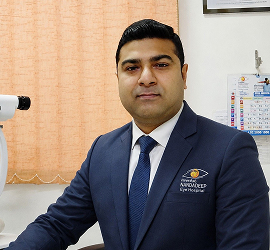
Optom Sayan Mukherjee
B.Optom., M. Optom. Consultant Optometrist, Vision Therapy, Speciality Contact lens