

Latest News
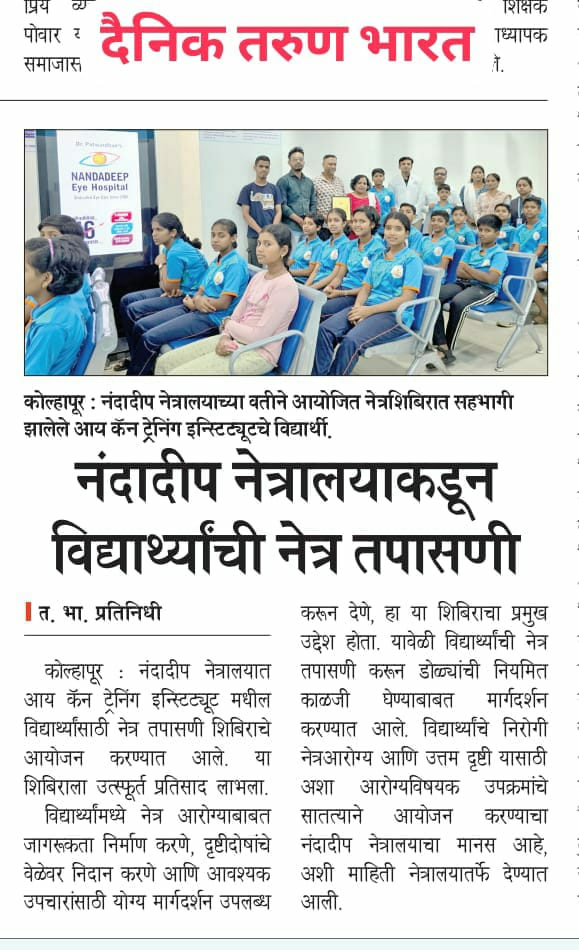
Eye Check-Up Camp for Students & Teachers
Eye Check-up Camp for Students and Teachers receives an Excellent Response, Promoting Early detection, healthy Vision and better Eye-Care Awareness.
Eye Check-Up Camp for Students and Teachers Receives Great Response
An Eye Check-up Camp for Students and Teachers was organized by Nandadeep Eye Hospital to promote awareness about vision and the importance of timely eye care. The initiative received an encouraging response from students and teachers, who actively participated in the screening and awareness activities.
As an ophthalmologist, I believe that eye health should not be overlooked during the school and college years. Students depend on clear vision for reading, writing, seeing the classroom board and using digital learning tools. Teachers, too, require comfortable vision for teaching, reading and working with digital devices. A simple screening can sometimes identify a vision concern that a person may not have recognized on their own.
Why Eye Screening Is Important for Students
Children and young adults do not always realize that their vision may not be normal. If one eye sees better than the other, or if the reduction in vision develops gradually, a student may simply adapt to it without complaining.
Early Identification Can Make a Difference
During an eye check-up, vision is assessed and individuals who may require further evaluation can be identified. It is important to understand that screening is not the same as a complete eye examination or diagnosis. If a concern is detected, an ophthalmologist can perform a detailed examination and advise the appropriate next step.
Students who frequently complain of blurred vision, difficulty seeing the board, headaches during reading or discomfort while performing visual tasks should not ignore these symptoms. These complaints can have several causes, and proper examination is necessary to determine the reason.
Eye Check-Up and Better Learning
Clear vision is an important part of the learning process. A student who cannot see the board clearly may have difficulty following lessons or copying information. Similarly, difficulty reading books or digital content can make studying uncomfortable.
However, it is important not to assume that every academic difficulty is caused by an eye problem. Learning ability is influenced by many factors. From an eye-care perspective, ensuring that students have appropriate vision is simply one important part of supporting their overall educational experience.
Teachers can also play a valuable role. If a student repeatedly squints, moves very close to the board or reading material, closes one eye while looking at distant objects, or complains of visual discomfort, the concern can be communicated to the parents so that professional evaluation can be considered.
Teachers Also Need Regular Eye Care
The participation of teachers in the camp was equally important. Teachers spend long hours reading, preparing lessons, using computers and interacting with students.
Age-related changes in near vision can also affect adults, particularly while reading or using digital devices. Rather than assuming that visual discomfort is simply due to tiredness, individuals with persistent symptoms should consider an appropriate eye examination.
Digital Screen Use and Eye Health
Today, smartphones, computers, tablets and other screens are commonly used for education and communication. Prolonged screen use can be associated with temporary symptoms such as eye strain, dryness, watering or difficulty focusing.
Healthy Screen Habits for Students and Teachers
Some simple habits can make prolonged digital work more comfortable:
- Take regular breaks during extended screen use.
- Avoid holding phones or books unnecessarily close to the eyes.
- Maintain comfortable lighting while studying or working.
- Adjust screen brightness to a comfortable level.
- Blink regularly, particularly during prolonged screen concentration.
- Avoid using eye drops without appropriate medical advice.
- Consult an eye-care professional if symptoms are persistent or worsening.
These measures are useful for comfort, but they should not replace an eye examination when someone has continuing visual symptoms.
Role of Parents in Children’s Eye Health
Parents should pay attention when children repeatedly complain about blurred vision, headaches while reading, difficulty seeing distant objects or eye discomfort.
Children may not always understand that their vision has changed. Some may believe that everyone sees the same way they do. Regular observation by parents and teachers can therefore be helpful.
If a child is already prescribed glasses, parents should encourage appropriate use according to the ophthalmologist’s advice. Glasses should not be purchased solely on the basis of another person’s prescription because the correct prescription needs to be determined individually.
What an Eye Screening Camp Can Achieve
An eye screening camp for students and teachers is valuable not only because it checks vision but also because it creates an opportunity for health education.
Participants can learn why regular eye care matters, which symptoms should not be ignored and when professional consultation may be appropriate.
Screening can identify people who may need further assessment, but it is important to remember that a normal screening result does not necessarily rule out every eye condition. Anyone experiencing persistent symptoms should seek a comprehensive examination from an ophthalmologist.
Encouraging Preventive Eye Care
From an ophthalmologist’s perspective, prevention and early attention are important aspects of eye care. People often wait until their vision becomes significantly uncomfortable before seeking help. Awareness programs can encourage individuals to seek advice earlier.
The positive participation of students and teachers in this initiative is therefore encouraging. Such programs can help make eye health a regular part of conversations about student and community well-being.
Nandadeep Eye Hospital Promotes Eye Health Awareness
The initiative by Nandadeep Eye Hospital highlights the importance of connecting healthcare services with educational communities. Students and teachers spend a significant portion of their day in educational environments, making these settings suitable for health-awareness activities.
The response to the camp also demonstrates that students and teachers are willing to participate in preventive healthcare initiatives when the information is presented in an accessible manner.
Eye health awareness should continue beyond a single event. Educational institutions, parents and healthcare professionals can work together to encourage appropriate eye-care practices and timely consultation whenever required.
A Message from an Ophthalmic Perspective
Good vision should not be taken for granted. If a student or teacher notices a persistent change in vision, repeated headaches associated with visual work, eye pain, double vision, sudden loss of vision or any other concerning symptom, professional medical assessment should not be delayed.
Parents are encouraged to consider a Paediatric Eye Check-up for their children to help identify vision-related concerns early and support healthy visual development.
At the same time, there is no need to create unnecessary anxiety around routine eye symptoms. Many common complaints can have simple and treatable causes. The important point is to identify the cause through appropriate examination rather than self-diagnosing.
The Eye Check-up Camp conducted by Nandadeep Eye Hospital provided an opportunity to combine vision screening with practical eye-health awareness. The enthusiastic response from students and teachers shows the value of such initiatives in encouraging preventive care.
Regular awareness, appropriate screening and timely consultation can together help students and teachers maintain healthier vision and participate more comfortably in their academic and professional activities.