

Latest News
Glaucoma Awareness Camp Inspires Sangli
Glaucoma Awareness Camp At Nandadeep Eye Hospital, Sangli, Highlights Early Detection, Free Registration And 50% Discounts On Tests.
For many Senior Citizens, some of life’s happiest moments are the simplest ones – reading the morning newspaper, recognising a familiar face, watching grandchildren play or enjoying an evening walk with family. Good eyesight makes these everyday experiences possible. Yet, when vision gradually changes with age, many people assume it is something they simply have to accept.
But not every change in eyesight is just a part of growing older. Certain eye conditions can develop quietly, without pain or any obvious warning. Glaucoma is one of them. It can slowly damage vision while a person continues with normal daily activities, often without realising that something is wrong.
With the aim of bringing greater attention to this condition, Nandadeep Eye Hospital, Sangli, organised a special awareness and screening initiative for people in Sangli and nearby areas. The programme encouraged citizens to understand glaucoma, recognise the importance of timely diagnosis and seek proper eye care.
What Makes Glaucoma Difficult to Detect?
Glaucoma, commonly called Kachbindu, is a group of eye diseases that damage the optic nerve. This nerve carries visual information from the eyes to the brain and plays an essential role in our ability to see.
Eye pressure is an important factor associated with glaucoma, but the condition can also occur when the pressure readings appear normal.
The difficulty is that glaucoma usually does not cause noticeable symptoms in its early stages. There may be no pain, redness or sudden change in eyesight. A person might continue reading, cooking, travelling and managing household activities without knowing that their peripheral vision is gradually being affected.
As the disease progresses, the field of vision may become narrower. Unfortunately, damage that has already occurred to the optic nerve cannot generally be reversed.
This makes early diagnosis especially important. Identifying glaucoma before major vision loss occurs gives doctors an opportunity to begin appropriate treatment and help protect the vision that remains.
Why Older Adults Need to Take Eye Health Seriously
Ageing brings several changes in our bodies, and our eyes also need attention as the years pass. Many older adults adjust their daily routines to accommodate changes in eyesight rather than getting those changes examined.
Some may increase the size of newspaper text, avoid driving after sunset or ask family members to help with activities that once felt easy.
While these changes can have different causes, they should not automatically be ignored.
People above 40, individuals with a family history of glaucoma and those with other recognised risk factors should discuss their screening needs with an eye specialist.
An important thing families can do is encourage their parents and grandparents to have regular eye examinations. Sometimes, a gentle reminder from a family member is all it takes for an older person to finally make that appointment.
Nandadeep Eye Hospital’s Efforts to Spread Awareness
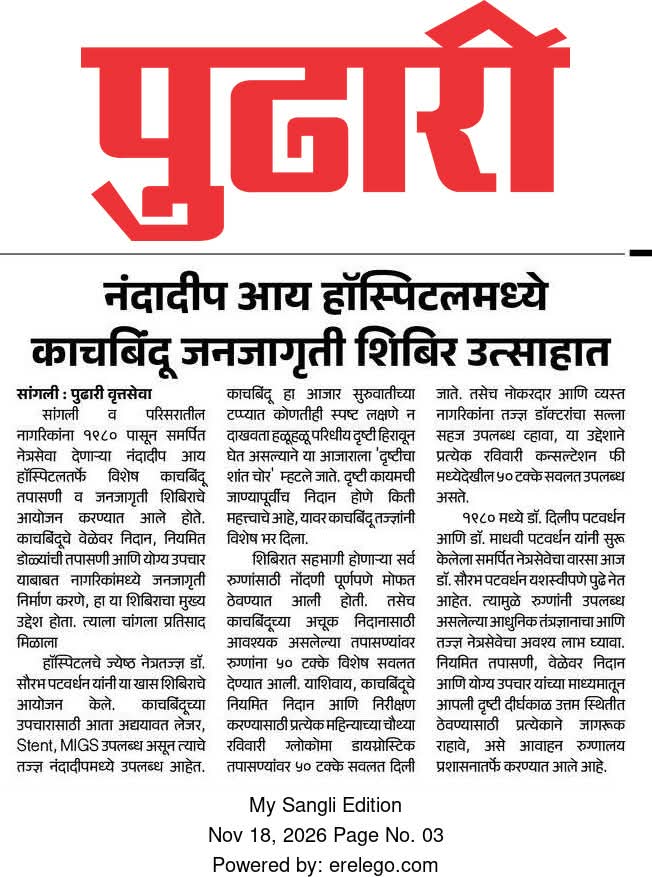
The awareness initiative at Nandadeep Eye Hospital was organised under the guidance of senior ophthalmologist Dr. Sourabh Patwardhan.
The programme focused on educating people about glaucoma and helping them understand why timely examinations matter. Free registration was provided for the camp, along with a 50% discount on diagnostic investigations.
The hospital has also made efforts to encourage regular examinations through its ongoing Sunday initiatives. As reported in Pudhari, a 50% discount is available on glaucoma diagnostic investigations on the fourth Sunday of every month. A 50% discount on consultation fees is also offered every Sunday.
These initiatives are particularly helpful in encouraging people who have been postponing their eye examinations to take the first step towards understanding their eye health.
How Is Glaucoma Diagnosed?
A simple vision check alone may not be enough to identify glaucoma. A proper assessment helps the ophthalmologist understand the health of the optic nerve and identify any changes that may need attention.
Depending on the patient’s age, symptoms and medical history, the examination may include:
Eye pressure measurement: To check the pressure inside the eyes.
Optic nerve examination: To look for signs of glaucoma-related damage.
Visual field testing: To identify changes in side vision that may not be noticeable during everyday activities.
OCT investigation: To examine the optic nerve and surrounding retinal nerve fibre layers.
Corneal thickness measurement: To help doctors interpret eye pressure readings accurately.
Not every patient requires every investigation. The ophthalmologist decides which tests are appropriate after evaluating the individual.
People interested in understanding the process can explore Nandadeep’s Glaucoma Diagnostic and Examination Services.
Advanced Treatment Options for Glaucoma
Hearing that a family member has Glaucoma can be worrying. Many patients naturally have questions about whether the condition can be controlled and what treatment will involve.
The good news is that different Treatment approaches are available to manage Glaucoma. The choice depends on the type of Glaucoma, its severity, eye pressure and the extent of Optic Nerve damage.
As highlighted in the newspaper report, Nandadeep Eye Hospital offers advanced treatment facilities, including Laser procedures, Stent-based treatments and Minimally Invasive Glaucoma Surgery (MIGS).
Depending on the Clinical Findings, Treatment may involve prescribed eye drops, laser procedures or Surgery. Regular follow-up Examinations are also important because Glaucoma requires continued monitoring.
The aim is to control the condition and reduce the possibility of further vision loss. Treatment plans are individualised, as the needs of one patient may be different from those of another.
A Legacy Built Around Better Eye Care
Nandadeep Eye Hospital’s journey in eye care began in 1980 with Dr. Dileep Patwardhan and Dr. Madhavi Patwardhan.
Over the years, the hospital has continued to strengthen its eye care services through experienced specialists, modern diagnostic technology and advanced treatment facilities.
Today, under the guidance of Dr. Sourabh Patwardhan, the hospital continues to emphasise not only treatment but also the importance of educating people about eye health.
The glaucoma awareness programme is another effort to bring important eye care information closer to the community.
Give Your Eyes the Attention They Deserve
For someone who has spent a lifetime caring for their family, maintaining independence and enjoying everyday moments, protecting eyesight becomes especially meaningful with age.
A regular eye examination may seem like a small thing, but it can help identify problems that otherwise remain unnoticed. Families should encourage older members to take their eye health seriously, even when they feel their vision is normal.
If you are above 40, have a family history of glaucoma or have concerns about your eyesight, speak with an ophthalmologist about an appropriate examination schedule.
Through its Glaucoma Screening and awareness initiatives, Nandadeep Eye Hospital, Sangli, hopes to remind people that taking care of their eyes should never be postponed.
Because every familiar face, every family moment and every little thing we love seeing deserves to remain a part of our lives for as long as possible.